Explore our network of country and industry based websites to access localized information, product offerings, and business services across our group.
Log in to start sending quotation requests for any product.
Don't have an account? Sign Up Here
Home Global Lecithin Market Demand and Sourcing Trends for Industrial Buyers
Trade Insights | Applications and Buyers | 25 June 2026
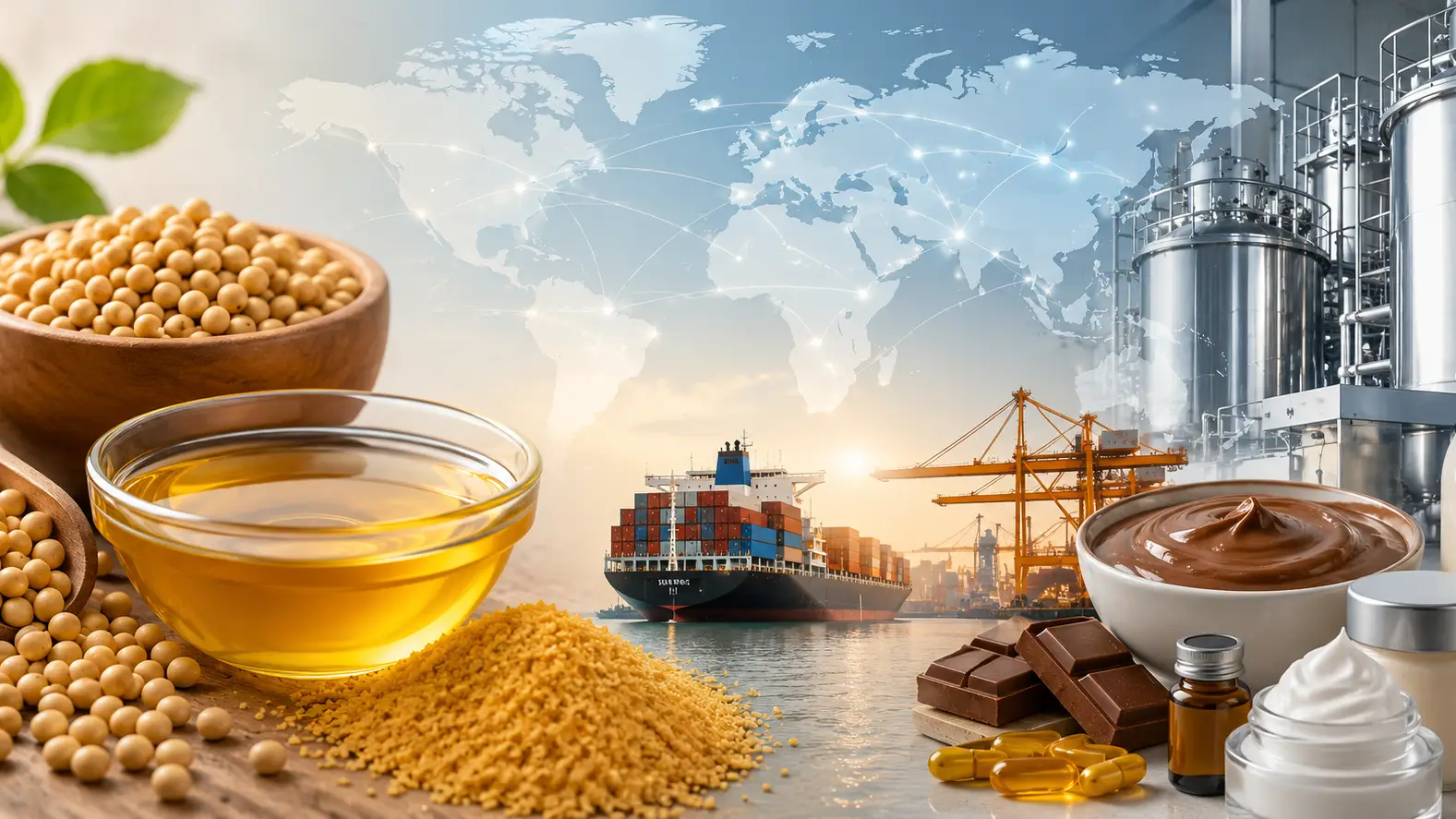
Understanding Lecithin and Its Commercial Importance
Key Industrial Applications Driving Lecithin Demand
Global Market Trends Influencing Lecithin Consumption
Buyer Intent and Procurement Considerations
Sourcing Lecithin in the Global B2B Marketplace
Commercial Positioning and Future Opportunities
Conclusion
Lecithin is a naturally occurring mixture of phospholipids commonly derived from soybeans, sunflower seeds, and other plant sources. It is widely valued for its emulsifying, stabilizing, and dispersing properties, making it an important ingredient in numerous industrial formulations. As manufacturers continue seeking multifunctional ingredients, lecithin remains a critical component across several sectors.
According to technical information published by the United States Food and Drug Administration (FDA), lecithin is widely recognized for its safe use in food processing and ingredient formulations. This regulatory acceptance supports its continued adoption in global manufacturing operations.
The commercial importance of lecithin extends beyond its role as a food additive. Manufacturers use it to improve texture, enhance product stability, reduce viscosity, and optimize processing efficiency. These functional benefits allow producers to improve product consistency while maintaining operational performance.
Growing consumer preference for naturally derived ingredients has further strengthened the market position of lecithin. As industries prioritize clean-label and plant-based formulations, demand for lecithin continues to expand across both developed and emerging markets.
Industrial demand for lecithin is closely tied to its versatility. The food and beverage sector remains the largest consumer, utilizing lecithin in chocolate, bakery products, dairy alternatives, instant foods, and confectionery products. Its ability to improve emulsification and shelf stability makes it a valuable processing aid.
Market analysis from industry organizations such as the International Food Information Council highlights ongoing demand for ingredients that support formulation efficiency and product quality. Lecithin aligns well with these requirements due to its multifunctional characteristics.
The animal feed industry uses lecithin to improve nutrient absorption and feed efficiency. Manufacturers often incorporate lecithin into feed formulations to enhance fat utilization and support livestock nutrition strategies.
Pharmaceutical and personal care manufacturers also rely on lecithin. In pharmaceuticals, it serves as an excipient and delivery-system component, while personal care companies utilize it in creams, lotions, and cosmetic formulations to improve texture and ingredient compatibility. These diversified applications contribute significantly to sustained market growth.
The global lecithin market is benefiting from multiple macroeconomic and consumer-driven trends. Increasing demand for processed foods, plant-based products, and nutritional supplements continues to create opportunities for lecithin suppliers and distributors worldwide.
According to market research published by Grand View Research, growing interest in natural emulsifiers and functional ingredients is contributing to steady expansion within the global lecithin sector. Regional demand growth remains particularly strong in Asia-Pacific and North America.
Supply chain transparency has become an increasingly important purchasing factor. Buyers are evaluating sourcing origins, sustainability certifications, and quality assurance programs more carefully than in previous years.
At the same time, manufacturers are seeking suppliers capable of providing consistent quality and reliable logistics support. These expectations are influencing procurement decisions and encouraging closer partnerships between buyers, distributors, and ingredient producers throughout the supply chain.
Lecithin buyers typically include food manufacturers, feed producers, pharmaceutical companies, nutraceutical brands, personal care formulators, and chemical distributors. Procurement teams evaluate suppliers based on product specifications, regulatory compliance, supply reliability, and commercial competitiveness.
According to guidance from food ingredient industry associations, quality documentation and traceability remain critical requirements during supplier qualification processes. Buyers increasingly require detailed technical and regulatory information before making purchasing decisions.
Procurement professionals commonly compare lecithin suppliers based on source material, functionality, certification status, packaging options, and supply continuity. Product consistency is especially important for manufacturers operating large-scale production facilities.
For organizations evaluating sourcing options, the Lecithin sourcing page provides product information relevant to industrial applications and procurement assessments. Access to technical product details can help support supplier evaluation and purchasing workflows.
As global ingredient supply networks become increasingly interconnected, sourcing strategies are evolving. Buyers are looking beyond local suppliers and engaging with international distributors capable of supporting regional and cross-border procurement requirements.
Industry reports from supply chain and ingredient sectors indicate that digital procurement platforms are playing a larger role in supplier discovery and sourcing efficiency. This trend is particularly relevant for specialty ingredients and industrial raw materials.
B2B marketplaces offer procurement teams access to multiple supply options, product information, and commercial channels within a centralized environment. Such platforms can improve sourcing transparency while reducing supplier search time.
For companies seeking industrial ingredient solutions, the Soya Lecithin supplier information page serves as a useful reference point for understanding product availability, specifications, and commercial sourcing opportunities within the broader chemical marketplace ecosystem.
Lecithin occupies a strategic position in several growing industries due to its multifunctional performance and compatibility with modern formulation trends. Demand growth across food processing, pharmaceuticals, animal nutrition, and personal care manufacturing continues to reinforce its commercial relevance.
Market observations from industry research publishers suggest that innovation in plant-based foods, functional nutrition products, and specialty formulations will continue supporting long-term demand for lecithin-based ingredients.
Reliable sourcing remains a key competitive factor for manufacturers and distributors. Supply disruptions, quality inconsistencies, and regulatory challenges can significantly affect production schedules and customer commitments.
Marketplaces such as Tradeasia, Chemtradeasia, and Tradechem help connect buyers with industrial ingredient sourcing opportunities while supporting procurement efficiency. As global demand continues to evolve, supplier reliability and technical support will remain central to successful purchasing strategies.
Lecithin continues to play a critical role across multiple industrial sectors due to its emulsifying, stabilizing, and formulation-enhancing properties. Strong demand from food, feed, pharmaceutical, and personal care industries is expected to support continued market expansion.
For procurement teams seeking dependable sourcing options, the Lecithin product page offers valuable product information that can support supplier evaluation and purchasing decisions. As market requirements evolve, informed sourcing strategies will become increasingly important for maintaining competitiveness and operational resilience.
Sources
We're committed to your privacy. Tradeasia uses the information you provide to us to contact you about our relevant content, products, and services. For more information, check out our privacy policy.


 English
 Indonesian
 简体字
简体字
 العربية
 Español
 Français
 Português
 日本語
日本語
 한국어
한국어
 Tiếng Việt



















