Explore our network of country and industry based websites to access localized information, product offerings, and business services across our group.
Log in to start sending quotation requests for any product.
Don't have an account? Sign Up Here
Home Liquid Glucose Supply Chain Trends and Market Outlook 2026
Trade Insights | Supply Chain | 15 June 2026
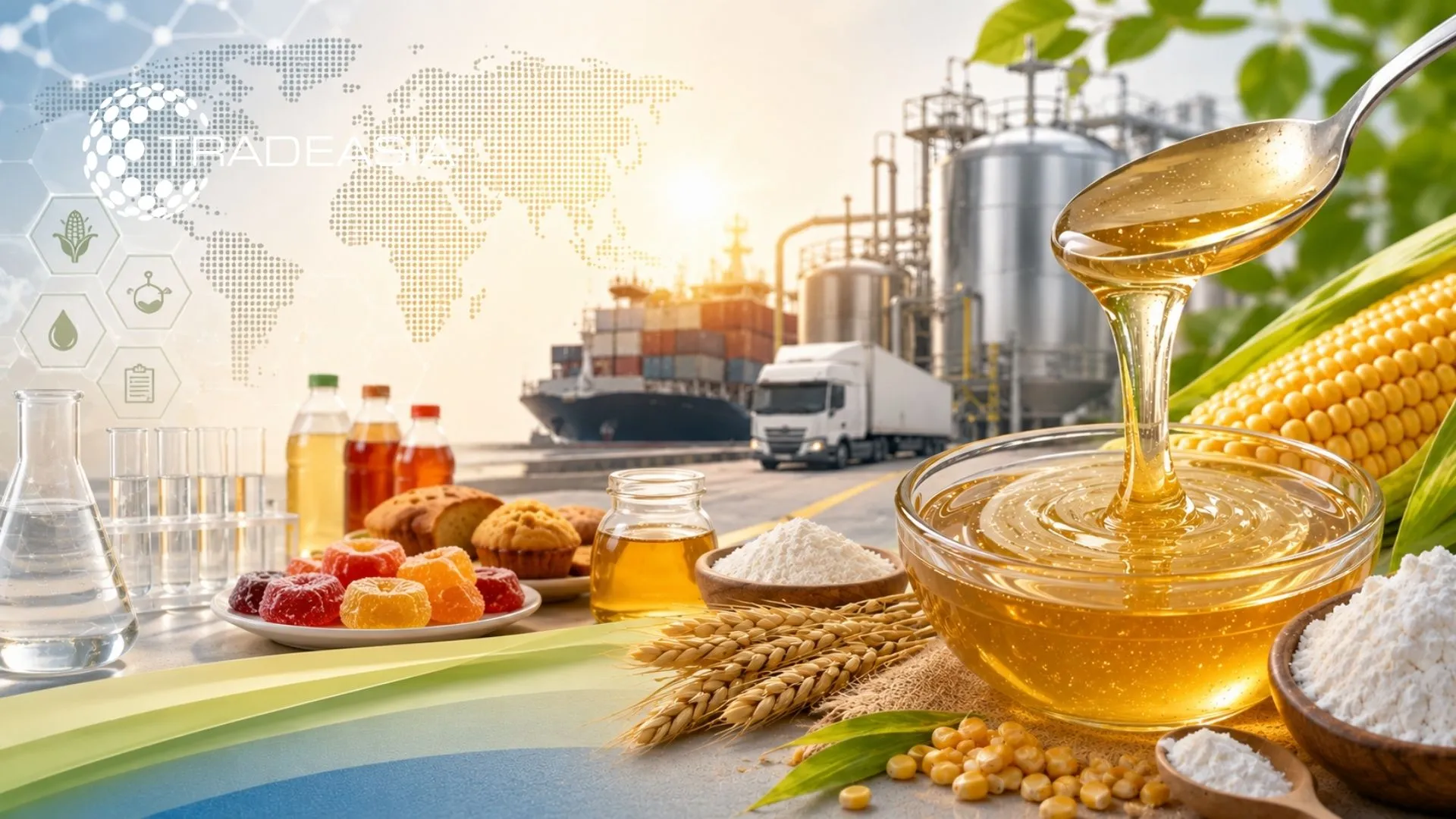
Introduction Liquid Glucose
Global Market Outlook for Liquid Glucose in 2026
Product Overview: Specifications and Grades of Liquid Glucose
Supply Chain Dynamics and Sourcing Strategies
Applications, Benefits, and Innovation in Food Additives
Conclusion
The global food and beverage industry is undergoing rapid transformation, and carbohydrate-based sweeteners are at the center of this change. Among them, liquid glucose has emerged as a versatile ingredient that supports not only sweetness but also texture, stability, and shelf life in a wide range of food additive systems. As manufacturers navigate inflationary pressures, evolving consumer preferences, and tighter regulatory frameworks, the reliability and efficiency of the liquid glucose supply chain have become strategic priorities.
Looking toward 2026, industry stakeholders are increasingly focused on how to secure consistent quality and competitive pricing for liquid glucose while diversifying sourcing and improving logistics resilience. From confectionery and bakery to beverages, processed foods, and pharmaceutical excipients, demand is supported by both mature markets in North America and Europe and rapidly expanding consumption in Asia-Pacific, Latin America, and the Middle East. In this environment, global distributors such as chemtradeasia play an important role in connecting producers and end-users across regions.
This article provides a detailed, globally oriented analysis of liquid glucose as a key food additive input, exploring market outlook, product specifications, supply chain dynamics, and emerging applications up to 2026. It is designed for procurement managers, formulators, supply chain planners, and business development professionals seeking data-backed insight into how to manage risk and unlock value in liquid glucose sourcing.
Liquid glucose, also known as glucose syrup, is primarily produced by the hydrolysis of starch from corn, wheat, tapioca, or other cereals. The global starch sugar market has been growing steadily, driven by processed food consumption, urbanization, and the shift from traditional sucrose to functional sweeteners. Industry analyses prior to 2024 indicated that the broader glucose syrup market was expanding at a compound annual growth rate (CAGR) in the range of 3–5%, with Asia-Pacific accounting for the largest share of both production and consumption. By 2026, this trend is expected to continue as India, China, and Southeast Asian countries increase their capacities and export footprints.
Several macro drivers will shape liquid glucose demand in 2026. First, the continued expansion of confectionery, bakery, and ready-to-drink beverage segments, especially in emerging markets, will sustain baseline growth. Second, the ongoing reformulation of products to manage sweetness, viscosity, and cost will encourage manufacturers to partially replace sucrose with food-grade liquid glucose. Third, the growth of nutraceuticals, functional foods, and specialized dietary products will support demand for customized grades of liquid glucose with controlled dextrose equivalent (DE) and impurity profiles.
However, the market outlook is not without challenges. Volatility in agricultural commodities, climate-related impacts on corn and wheat yields, and geopolitical disruptions can affect starch availability and pricing. Energy costs and freight rates also influence the landed cost of liquid glucose, especially for import-dependent regions. To mitigate these risks, global buyers are increasingly turning to diversified sourcing models and long-term supply partnerships with integrated distributors such as chemtradeasia, who can leverage multi-origin supply networks and logistics expertise to stabilize supply through 2026 and beyond.
Liquid glucose is a concentrated aqueous solution of nutritive saccharides obtained from starch hydrolysis. Its functionality depends heavily on parameters such as dextrose equivalent (DE), solids content, viscosity, and impurity levels. Typical commercial food-grade liquid glucose has a DE value in the range of 38–45, total solids around 80–85%, and is colorless to pale yellow with a neutral to slightly sweet taste. The product is usually odorless, with very low sulfur dioxide and ash content to meet food safety and quality specifications.
Different grades of liquid glucose are tailored for specific applications. Low to medium DE syrups (for example, DE 38–42) provide excellent body, humectancy, and crystallization control, making them ideal for confectionery, jams, and bakery glazes. Higher DE syrups provide more sweetness and are sometimes used in beverages and dessert toppings. Producers and distributors such as chemtradeasia typically offer multiple grades that comply with international standards like FAO/WHO Codex Alimentarius, EU food additive regulations, and country-specific food codes, as well as Halal and Kosher certifications where required.
From a technical standpoint, key specifications that buyers monitor include microbial limits, pH, color (often expressed in ICUMSA units), reducing sugar content, and heavy metal limits. Packaging formats are also an important consideration in the supply chain: bulk liquid in ISO tanks or road tankers for large industrial users; intermediate bulk containers (IBCs) of 1,000 liters; and drums for smaller or more specialized applications. Reliable suppliers and distributors ensure traceability through batch coding, provide Certificates of Analysis (CoA), and maintain consistency between batches—factors that are essential for large-scale food manufacturers operating under strict quality management systems such as ISO 22000 and FSSC 22000.
The liquid glucose supply chain is closely linked to regional starch processing hubs, particularly in North America, Europe, and Asia-Pacific. Corn-based glucose dominates in the United States and parts of Asia, while wheat-based and other cereal-based glucose may be more common in Europe depending on agricultural policy and feedstock availability. Logistics flows typically involve shipment from starch processing plants to export terminals, followed by bulk sea freight to destination markets, and finally regional distribution to end-users. Given the product’s relatively high density and moderate value-to-weight ratio, optimizing freight and storage is critical to maintaining competitive pricing.
Recent years have highlighted the vulnerability of global supply chains to disruptions such as port congestion, container shortages, and sudden spikes in freight rates. By 2026, many food manufacturers are expected to adopt more resilient sourcing strategies, including multi-origin procurement, regional safety stocks, and closer collaboration with integrated distributors. Companies like chemtradeasia can support this shift by aggregating demand from multiple customers, negotiating long-term freight contracts, and offering flexible delivery options across key trade lanes. This approach can reduce lead-time variability and buffer against localized disruptions.
Risk management in liquid glucose sourcing also involves careful attention to quality and regulatory compliance. Different countries may impose specific requirements on contaminants, labeling, and food safety documentation. Working with a global distributor that maintains standardized documentation, such as Safety Data Sheets (SDS), technical data sheets, and origin certificates—simplifies cross-border trade. Furthermore, digitalization of supply chain processes, including real-time shipment tracking, electronic documentation, and demand forecasting tools, is expected to become more prevalent by 2026, improving visibility and planning accuracy for both suppliers and buyers.
Liquid glucose is widely used in the formulation of food additives and finished products due to its multifunctional properties. In confectionery, it helps control sucrose crystallization, ensuring smooth texture in candies, toffees, and caramel systems. Its humectant properties retain moisture, preventing products from drying out and extending shelf life. In bakery applications, liquid glucose contributes to crust color, softness, and improved mouthfeel, and it can act as a carrier for flavors and other additives. Beverage manufacturers use specific grades of food-grade liquid glucose to adjust sweetness, mouthfeel, and body, particularly in flavored drinks and syrups.
Beyond these traditional uses, liquid glucose is integrated into a wide range of food additive systems. It serves as a carrier and stabilizer in color preparations, flavor emulsions, and vitamin or mineral premixes. In dairy and frozen desserts, it helps manage freezing point depression and texture, supporting smoother ice cream and frozen novelties. In processed meats and sauces, it can contribute to browning reactions and flavor development. These benefits make liquid glucose a foundational ingredient for formulators seeking to balance cost, performance, and sensory attributes in 2026’s competitive food market.
Innovation in the sector is increasingly focused on cleaner labels, reduced sugar positioning, and functional benefits. While liquid glucose itself is a traditional ingredient, manufacturers are exploring combinations with high-intensity sweeteners, fibers, and polyols to create lower-calorie or reduced-sugar formulations without sacrificing texture. There is also interest in sourcing liquid glucose from alternative starches such as cassava or rice to support regional agricultural value chains and address allergen or GMO-related concerns. Distributors like chemtradeasia are positioned to respond by offering multiple origin options and tailored grades that align with evolving regulatory and consumer expectations.
As the global food additives industry moves toward 2026, liquid glucose will remain a core building block for product formulation, process efficiency, and cost optimization. Its role extends well beyond sweetness, encompassing texture control, moisture management, shelf-life extension, and functional support for flavors, colors, and nutritional additives. Demand growth, particularly in emerging markets, is expected to remain steady, supported by expanding middle-class consumption and the continued industrialization of food production.
At the same time, the liquid glucose supply chain will face ongoing challenges from commodity price volatility, logistics disruptions, and regulatory complexity. To address these issues, manufacturers and formulators are increasingly adopting diversified sourcing strategies, enhanced risk management, and closer partnerships with global distributors. Organizations such as chemtradeasia can add value by providing multi-origin supply options, consistent quality, and integrated logistics services that help stabilize costs and ensure reliable availability across regions.
This article is intended solely for informational and market insight purposes and does not constitute technical, safety, or professional advice. Users should independently verify all information with qualified experts, consult official documentation such as MSDS/SDS and applicable regulations, or contact our team for guidance on specific products, formulations, or applications before making any purchasing or operational decisions.
We're committed to your privacy. Tradeasia uses the information you provide to us to contact you about our relevant content, products, and services. For more information, check out our privacy policy.


 English
 Indonesian
 简体字
简体字
 العربية
 Español
 Français
 Português
 日本語
日本語
 한국어
한국어
 Tiếng Việt



















