Explore our network of country and industry based websites to access localized information, product offerings, and business services across our group.
Log in to start sending quotation requests for any product.
Don't have an account? Sign Up Here
Home Sodium Dihydrogen Phosphate Supply Chain and B2B Sourcing
Trade Insights | Supply Chain | 31 August 2026
Sodium Dihydrogen Phosphate in the Global Supply Chain
Production and Supply Chain Dynamics
Food Additive Applications and Demand
Buyer Requirements and Quality Considerations
Global Sourcing and Supplier Selection
Logistics, Inventory and Procurement Planning
B2B Market Outlook and Supply Chain Strategy
Conclusion: Building a Reliable SDP Supply Network
Sources
Sodium Dihydrogen Phosphate (SDP), also known as monosodium phosphate or sodium phosphate monobasic, is an inorganic phosphate compound identified by CAS 7558-80-7 and Codex INS 339(i). Its buffering and acidity-regulating characteristics make it an important functional ingredient for food and other formulated products.
For B2B procurement teams, SDP is more than a standard phosphate commodity. Supply decisions depend on grade, specification, packaging, documentation, production consistency, and the ability of suppliers to maintain dependable delivery schedules. These factors become particularly important for manufacturers operating continuous production lines.
A disruption in SDP availability can affect formulation schedules when the material is an established input in food processing or other manufacturing systems. Buyers therefore increasingly evaluate suppliers on supply continuity rather than simply comparing the lowest quoted purchase price.
A resilient supply chain requires coordination between manufacturers, exporters, distributors, logistics providers, and end users. For international buyers, supplier diversification and clear purchasing specifications can help reduce exposure to unexpected shortages, shipment delays, or inconsistent product quality.
The SDP supply chain begins with phosphate-based raw materials and chemical processing operations that convert upstream inputs into sodium phosphate products. Production capability, raw-material availability, plant reliability, energy costs, and quality-control systems can all influence the consistency and commercial availability of finished SDP.
Manufacturers serving regulated industries must also maintain appropriate analytical controls. For buyers, understanding the supplier's manufacturing base and quality-management practices provides useful insight into whether a quoted product can support long-term procurement requirements.
International SDP trade depends on manufacturing concentration, export infrastructure, shipping availability, and demand in consuming regions. Import-dependent markets may therefore rely on distributors and chemical trading companies to connect local buyers with qualified overseas producers.
For procurement teams, this makes regional supply intelligence particularly valuable. A supplier located closer to the consuming market may offer shorter transit times, while an established international producer may provide broader production capacity or more competitive bulk economics. The right choice depends on the buyer's volume, specification, lead-time, and risk requirements.
Food additives represent a strategically important demand channel for Sodium Dihydrogen Phosphate. Codex identifies SDP as INS 339(i), and the Codex GSFA database includes provisions for phosphate additives across food categories. Its role can include acidity regulation and buffering where controlled formulation conditions are required.
This functionality makes SDP relevant to manufacturers seeking predictable pH behavior and formulation performance. Depending on the product category and applicable regulations, phosphate ingredients can support the processing and stabilization requirements of commercial food formulations.
Beyond food processing, phosphate-based ingredients can also serve pharmaceutical and specialty formulation requirements. For example, sodium dihydrogen phosphate dihydrate is used as a component of phosphate buffer systems in pharmaceutical and biopharmaceutical applications.
This creates a diversified buyer base for qualified SDP suppliers. However, different applications can require different grades, specifications, documentation, and regulatory controls. Procurement teams should therefore avoid treating all SDP requirements as interchangeable when evaluating suppliers.
Commercial buyers typically begin qualification by defining required grade, purity, physical form, packaging, analytical specifications, and regulatory documentation. For food applications, compliance with relevant food-additive requirements is particularly important because the ingredient ultimately enters a regulated formulation environment.
A robust supplier package may include a Certificate of Analysis, Safety Data Sheet, product specification, batch information, origin details, and relevant compliance documentation. JECFA's specification record confirms the identity of Sodium Dihydrogen Phosphate and provides a recognized reference point for technical qualification.
Batch-to-batch consistency is a major procurement consideration because variations in raw materials can create downstream formulation challenges. Buyers should assess whether suppliers maintain documented quality controls and whether analytical results consistently correspond with agreed specifications.
For larger-volume contracts, procurement teams can strengthen supply assurance by establishing acceptance criteria before shipment, confirming packaging requirements, and defining procedures for handling non-conforming material. These measures can reduce quality-related disputes and support longer-term supplier relationships.
Selecting a Sodium Dihydrogen Phosphate supplier requires a balance between price, quality, capacity, lead time, documentation, and logistics performance. A low initial quotation may not represent the lowest total procurement cost if extended transit times, inconsistent documentation, or repeated quality issues create operational disruption.
B2B buyers can improve sourcing efficiency by comparing suppliers against a consistent qualification framework. Production capability, export experience, product grade, packaging options, minimum order quantities, payment terms, and delivery history are all commercially relevant when developing a supplier shortlist.
Digital B2B chemical marketplaces can simplify supplier discovery by bringing product information and sourcing opportunities into a centralized procurement environment. This can be particularly useful when buyers need to compare international suppliers or identify alternative sources for an established chemical requirement.
For Tradeasia, Chemtradeasia, and Tradechem Marketplace, the commercial opportunity lies in helping industrial buyers connect sourcing requirements with suitable supply channels. A marketplace-led approach can support supplier comparison while giving buyers greater visibility into product specifications, commercial terms, and international sourcing possibilities.
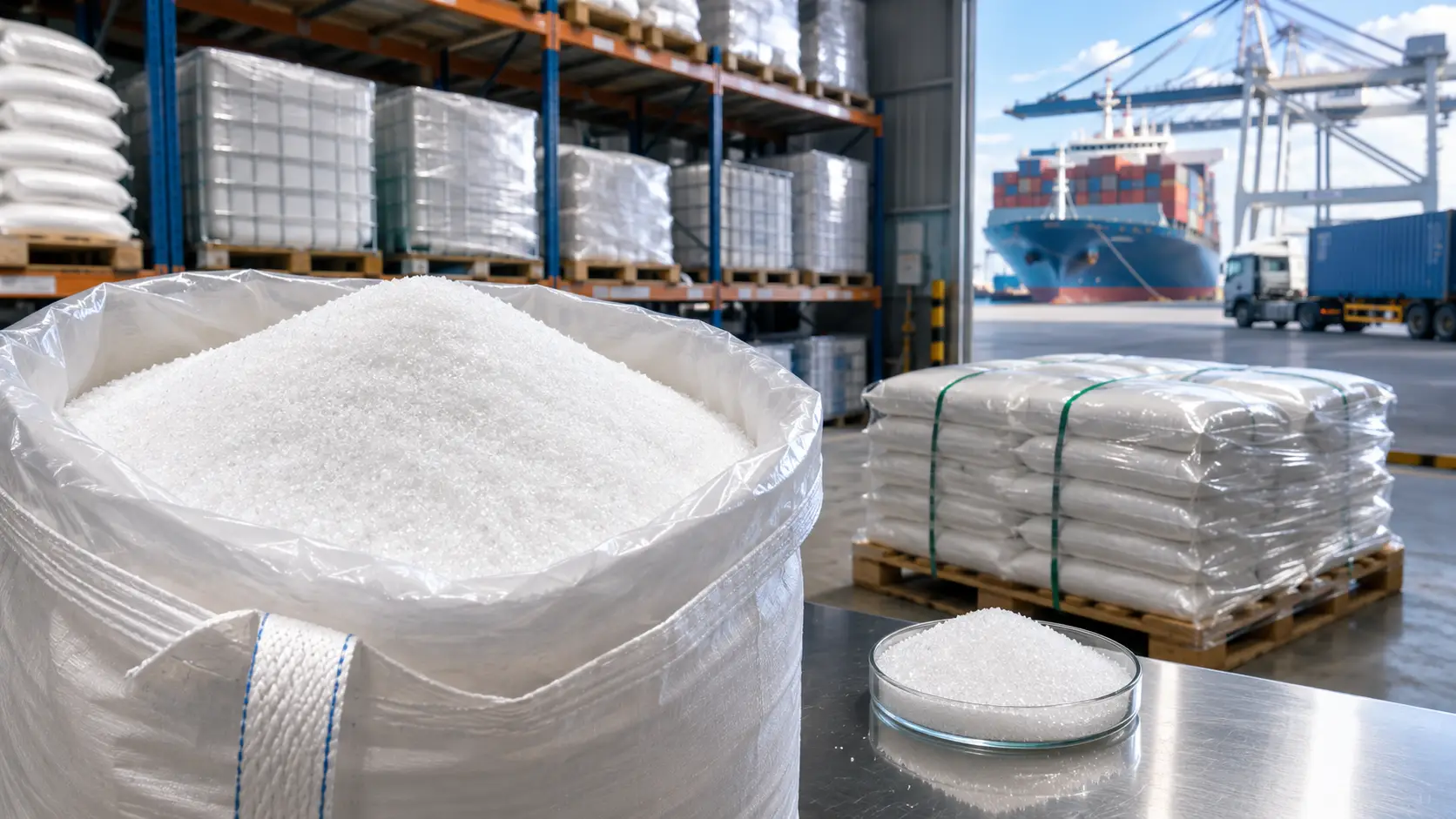
Sodium Dihydrogen Phosphate is generally traded as a solid chemical product, making packaging integrity and moisture management important considerations during storage and transportation. Buyers should align packaging specifications with shipment duration, warehouse conditions, handling procedures, and local distribution requirements.
International shipments also require coordination of documentation, customs procedures, freight schedules, and destination requirements. Procurement teams should therefore evaluate the complete landed-cost structure rather than focusing exclusively on the supplier's ex-works or FOB quotation.
Inventory planning should reflect consumption rates, supplier lead times, shipping variability, and the criticality of SDP within the buyer's manufacturing process. Maintaining an appropriate safety stock can provide protection against transportation delays without unnecessarily tying up working capital.
Long-term procurement agreements can also help manufacturers plan recurring requirements more effectively. Combining demand forecasting with multiple qualified sourcing options gives buyers greater flexibility when market conditions, freight availability, or supplier schedules change.
The commercial outlook for SDP is closely connected to its continuing role as a functional phosphate ingredient. Food manufacturers, distributors, pharmaceutical formulators, and other industrial users require dependable access to materials that meet defined technical and regulatory specifications.
As procurement organizations become more focused on supply-chain resilience, supplier qualification is likely to remain an important purchasing criterion. Buyers increasingly need transparent product information, dependable documentation, predictable lead times, and alternative sourcing options rather than transactional purchasing alone.
A practical SDP sourcing strategy should combine competitive pricing with quality assurance and continuity planning. Buyers can strengthen their position by maintaining approved suppliers, monitoring lead times, reviewing documentation before shipment, and periodically benchmarking alternative supply sources.
For suppliers and distributors, the opportunity is to differentiate through consistency, technical support, responsive communication, and dependable logistics. In a B2B marketplace environment, these factors can be as commercially important as the headline product price when customers are making recurring procurement decisions.
Sodium Dihydrogen Phosphate is a strategically relevant phosphate ingredient whose commercial value extends beyond its chemical identity. Its use in regulated food applications and other formulation industries makes reliable quality, documentation, and continuity important considerations for industrial buyers.
For procurement teams, an effective sourcing strategy should connect product specifications with supplier capability, logistics planning, inventory requirements, and regulatory expectations. This approach helps reduce avoidable supply risks while creating a stronger foundation for recurring international procurement.
Tradeasia, Chemtradeasia, and Tradechem Marketplace can serve as commercial channels for organizations seeking to identify and evaluate chemical supply opportunities across international markets. By connecting buyers with appropriate suppliers and supporting more structured sourcing processes, a B2B marketplace approach can help businesses develop reliable Sodium Dihydrogen Phosphate supply networks.
As demand for functional food ingredients and specialty formulation materials continues to support phosphate consumption, procurement teams that prioritize qualified suppliers, transparent specifications, and supply continuity will be better positioned to manage their long-term SDP requirements.
We're committed to your privacy. Tradeasia uses the information you provide to us to contact you about our relevant content, products, and services. For more information, check out our privacy policy.


 English
 Indonesian
 简体字
简体字
 العربية
 Español
 Français
 Português
 日本語
日本語
 한국어
한국어
 Tiếng Việt