Explore our network of country and industry based websites to access localized information, product offerings, and business services across our group.
Log in to start sending quotation requests for any product.
Don't have an account? Sign Up Here
Home Potassium Chloride Applications and B2B Buyer Sourcing Guide
Trade Insights | Applications and Buyers | 26 August 2026
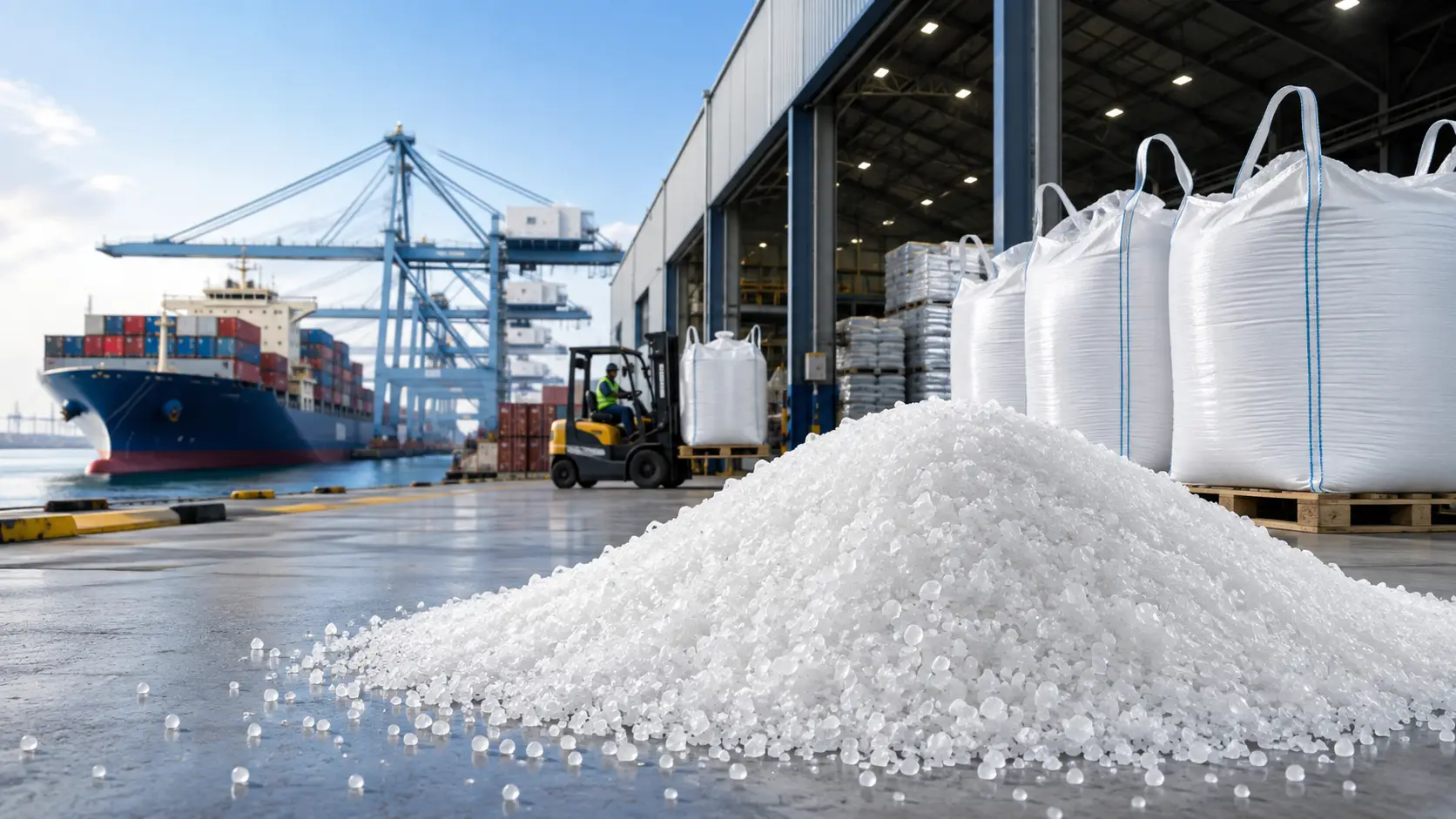
Potassium Chloride in the Global B2B Market
Fertilizer Applications and Agricultural Buyers
Food Additive and Food Processing Applications
Industrial, Chemical, and Feed Applications
Key Potassium Chloride Buyer Requirements
Sourcing, Supply Chain, and Procurement Considerations
Market Outlook and B2B Buying Strategy
Conclusion: Building a Reliable Potassium Chloride Supply Strategy
Sources
Potassium chloride, commonly identified as KCl and known as muriate of potash or MOP in fertilizer markets, is a commercially important inorganic salt with demand extending well beyond a single industry. Its strongest application is agriculture, where it provides soluble potassium to crops, but its functional properties also support food processing, feed, chemical processing, and other industrial uses. For B2B buyers, potassium chloride should therefore be evaluated according to application, grade, specification, particle size, purity, packaging, and regulatory requirements rather than simply as a commodity chemical.
The commercial importance of potassium chloride is closely connected with its role as a potassium fertilizer. FAO identifies potassium chloride as the most common potassium fertilizer, while USGS classifies MOP as one of the principal potassium-bearing fertilizer products. This broad agricultural use creates a substantial international trading market in which procurement decisions can be influenced by crop cycles, fertilizer demand, production availability, logistics, and regional purchasing patterns.
The same chemical identity does not automatically mean that every potassium chloride product is appropriate for every buyer. A fertilizer manufacturer may prioritize K₂O content, particle-size distribution, moisture, sodium, and physical handling properties, while a food manufacturer may require food-grade material and documentation suitable for its intended use. Industrial buyers may instead focus on purity, consistency, solubility, technical specifications, and process compatibility.
For distributors and procurement teams, this makes application mapping an essential first step. Buyers should identify the intended end use before comparing suppliers or quotations because the most commercially attractive offer is not necessarily the most suitable product. A reliable sourcing strategy connects the required specification with the correct grade, documentation, packaging format, delivery point, and supply schedule.
Agriculture represents the largest commercial application for potassium chloride. MOP is valued because KCl is readily soluble and supplies potassium, an essential plant nutrient. FAO describes potassium chloride as the most common K fertilizer, while its fertilizer specifications include both crystalline and granular MOP products. Standard fertilizer specifications can include a minimum 60% water-soluble potash expressed as K₂O, alongside controls for moisture, sodium, and particle size.
Agricultural buyers include fertilizer producers, NPK manufacturers, importers, distributors, cooperatives, plantation companies, and large-scale farming supply businesses. Their purchasing decisions are generally driven by nutrient concentration, physical form, compatibility with blending systems, handling characteristics, delivered cost, and seasonal availability. Granular material can be particularly relevant where buyers require controlled particle sizing and good blending performance.
The global fertilizer market gives potassium chloride an important international demand base. USGS estimated world potash consumption at 38.8 million metric tons in 2024 and projected consumption of approximately 40.9 million metric tons in 2025, with Asia and South America identified among the regions showing the highest consumption growth. These trends are commercially relevant to potassium chloride suppliers because MOP accounts for a major share of potash demand.
For B2B buyers, agricultural demand also means that procurement timing can materially affect supply planning. Fertilizer purchases often follow planting cycles and regional agricultural calendars, while international supply depends on mine output, export infrastructure, vessel availability, and port capacity. Buyers seeking stable supply should therefore consider forward purchasing, alternative origins, inventory planning, and clear product specifications rather than relying exclusively on spot-market availability.
Potassium chloride also has an established role in food processing. The U.S. FDA lists potassium chloride among substances added to food and identifies technical effects including flavor enhancement, nutrient supplementation, pH control, processing aid, stabilizer or thickener, and other functions. This makes food-grade potassium chloride relevant to manufacturers formulating products where controlled functionality and ingredient compliance are important.
One commercially important food application is sodium reduction. FDA guidance explains that potassium chloride can, in some circumstances, be used as a partial substitute for sodium chloride in food manufacturing. This gives food manufacturers an additional formulation option when developing products intended to reduce sodium while maintaining desired salt-related functionality. The actual suitability, use level, labeling, and regulatory treatment must nevertheless be assessed for the specific product and market.
Food manufacturers and ingredient distributors typically evaluate potassium chloride differently from fertilizer buyers. Procurement teams may require food-grade specifications, certificates of analysis, traceability documentation, consistent purity, suitable packaging, and evidence supporting compliance with the destination market's food regulations. Product identity and technical documentation become especially important when potassium chloride is incorporated directly into finished food products.
International food buyers should also distinguish between general chemical availability and authorization for a particular food use. FDA records identify potassium chloride under 21 CFR 184.1622, while international regulatory frameworks can apply different conditions of use. In the European market, EFSA's food-additive framework requires assessment of identity, characterization, conditions of use, dietary exposure, and safety for relevant applications. Buyers should therefore confirm regulatory suitability before commercial purchase.
Beyond agriculture and food, potassium chloride can serve as a potassium and chloride source in chemical and industrial processes. Its water solubility and ionic composition make it useful where potassium ions or chloride ions are required as process inputs. Depending on the application, buyers may include chemical manufacturers, industrial formulators, laboratories, process industries, and distributors supplying specialized users.
Industrial procurement is often specification-driven. Buyers may compare purity, insoluble matter, moisture, particle size, solubility, packaging, and consistency between batches. Unlike fertilizer procurement, where nutrient analysis is central, industrial buyers may place greater emphasis on process performance and impurity control. This distinction reinforces the importance of matching the commercial grade to the actual process requirement.
Potassium chloride can also appear in animal nutrition and feed-related formulations where potassium supplementation is required. Feed manufacturers and premix companies generally require dependable specifications and consistent composition because formulation accuracy affects the nutritional profile of the finished product. The purchasing process can consequently involve technical approval before a supplier becomes an established source.
For feed and nutrition buyers, documentation and quality consistency can be as important as price. Procurement teams may evaluate certificates of analysis, manufacturing controls, packaging integrity, traceability, and supply continuity before approving a source. Suppliers serving this segment should therefore communicate specifications clearly and avoid treating feed-related demand as interchangeable with fertilizer-grade purchasing.
The first question for a potassium chloride buyer should be whether the material meets the technical requirements of the intended application. For fertilizer use, relevant parameters can include K₂O content, moisture, sodium, particle-size distribution, and physical form. FAO specifications distinguish crystalline powder and granular MOP and provide different particle-size requirements for these formats.
Food and specialized industrial applications can require a different specification framework. A buyer may need to confirm purity, permitted use, food-grade status, analytical documentation, and packaging controls. For this reason, procurement teams should request a current technical data sheet and certificate of analysis and compare the stated specification with their internal purchasing standard before finalizing an order.
Packaging selection is another important purchasing variable. Potassium chloride may move through international supply chains in bulk, bags, or other commercial formats depending on the buyer's volume and handling infrastructure. Fertilizer purchasers with storage terminals may prioritize bulk logistics, whereas distributors and food-industry customers may require packaged material for controlled warehouse handling.
Logistics should also be assessed alongside the chemical specification. Port location, container or bulk-vessel availability, inland transportation, warehouse capacity, delivery terms, and import requirements can all affect the final landed cost. A supplier with a competitive ex-works or FOB price may not provide the lowest total procurement cost if freight, handling, or destination charges are significantly higher.
Potassium chloride sourcing is closely linked to the global potash mining and processing industry. USGS data show that Canada is a major producer and exporter, while significant production also comes from countries including Belarus and Russia. USGS reported that world annual potash production capacity was approximately 66.1 million tons of K₂O in 2025, with capacity projected to reach about 77.4 million tons by 2029 as new projects and expansions come online.
This production structure creates both scale advantages and procurement risks. Buyers can benefit from a mature global market, but international sourcing can also be affected by geopolitical developments, trade restrictions, infrastructure constraints, mine outages, and changes in regional fertilizer demand. Diversifying qualified supply options can therefore improve resilience for manufacturers and distributors with recurring potassium chloride requirements.
Supplier qualification should go beyond obtaining a price quotation. B2B buyers can evaluate product specifications, production origin, documentation, quality consistency, packaging options, minimum order quantities, lead time, shipment history, and commercial terms. For food-related purchases, regulatory documentation and intended-use suitability should receive particular attention. For fertilizer purchases, nutrient analysis and particle size may be more important.
A marketplace-oriented sourcing process can help procurement teams compare offers according to the variables that actually influence total purchasing value. Rather than selecting a supplier solely on unit price, buyers should assess the complete commercial proposition: specification compliance, reliability, delivery capability, documentation, payment terms, logistics, and responsiveness. This approach is particularly valuable when purchasing potassium chloride across borders.
The outlook for potassium chloride remains closely connected with agricultural potassium demand. USGS reported that world potash consumption increased from 37.5 million tons in 2023 to an estimated 38.8 million tons in 2024, with further growth projected for 2025. The same source identified Asia and South America as important growth regions, reinforcing the importance of agricultural markets in future procurement planning.
Supply capacity is also expected to expand. USGS reported projected global annual potash production capacity of approximately 77.4 million tons of K₂O by 2029, compared with 66.1 million tons in 2025. New MOP capacity and expansions are expected to contribute substantially to this growth, potentially creating additional sourcing opportunities while also increasing competition among producers and exporters.
For procurement teams, the most effective potassium chloride strategy is likely to combine specification discipline with supply diversification. Buyers can establish approved specifications, define acceptable origins, monitor market and freight conditions, maintain qualified alternative suppliers, and align purchasing schedules with their production or agricultural demand cycles. This is particularly important for businesses that cannot easily substitute potassium chloride within their formulations or fertilizer blends.
A commercially sound sourcing strategy should ultimately focus on delivered value rather than headline price. Reliable quality, predictable lead times, regulatory suitability, appropriate packaging, and dependable communication can materially reduce procurement risk. For global buyers, working with an experienced B2B chemical sourcing partner can simplify supplier evaluation and create a more structured route from product requirement to international delivery.
Potassium chloride serves several important B2B markets, but fertilizer remains its defining commercial application. Its use as MOP provides a major agricultural demand base, while food processing, feed, and industrial applications create additional buyer segments. The differences between these markets mean that successful procurement depends on selecting the correct grade and specification for each end use rather than treating potassium chloride as a uniform commodity.
For buyers, the central priorities are clear product specifications, appropriate documentation, consistent quality, competitive landed cost, reliable logistics, and continuity of supply. Food manufacturers should pay particular attention to regulatory suitability and intended use, while fertilizer buyers should focus closely on nutrient analysis, particle size, physical form, and seasonal availability. These requirements should be established before supplier comparison begins.
As international potassium chloride demand continues to connect agricultural, food, feed, and industrial markets, procurement teams benefit from a sourcing approach that combines product knowledge with commercial coordination. Tradeasia International can support B2B buyers by connecting product requirements with sourcing, documentation, logistics, and international trade considerations across relevant chemical and ingredient markets.
For manufacturers, distributors, importers, and procurement teams, the objective is not simply to buy potassium chloride, but to establish a dependable supply relationship aligned with application requirements and business priorities. A structured sourcing process can help buyers evaluate suitable offers, reduce avoidable procurement risks, and build a more resilient potassium chloride supply strategy for international markets.
We're committed to your privacy. Tradeasia uses the information you provide to us to contact you about our relevant content, products, and services. For more information, check out our privacy policy.


 English
 Indonesian
 简体字
简体字
 العربية
 Español
 Français
 Português
 日本語
日本語
 한국어
한국어
 Tiếng Việt



















